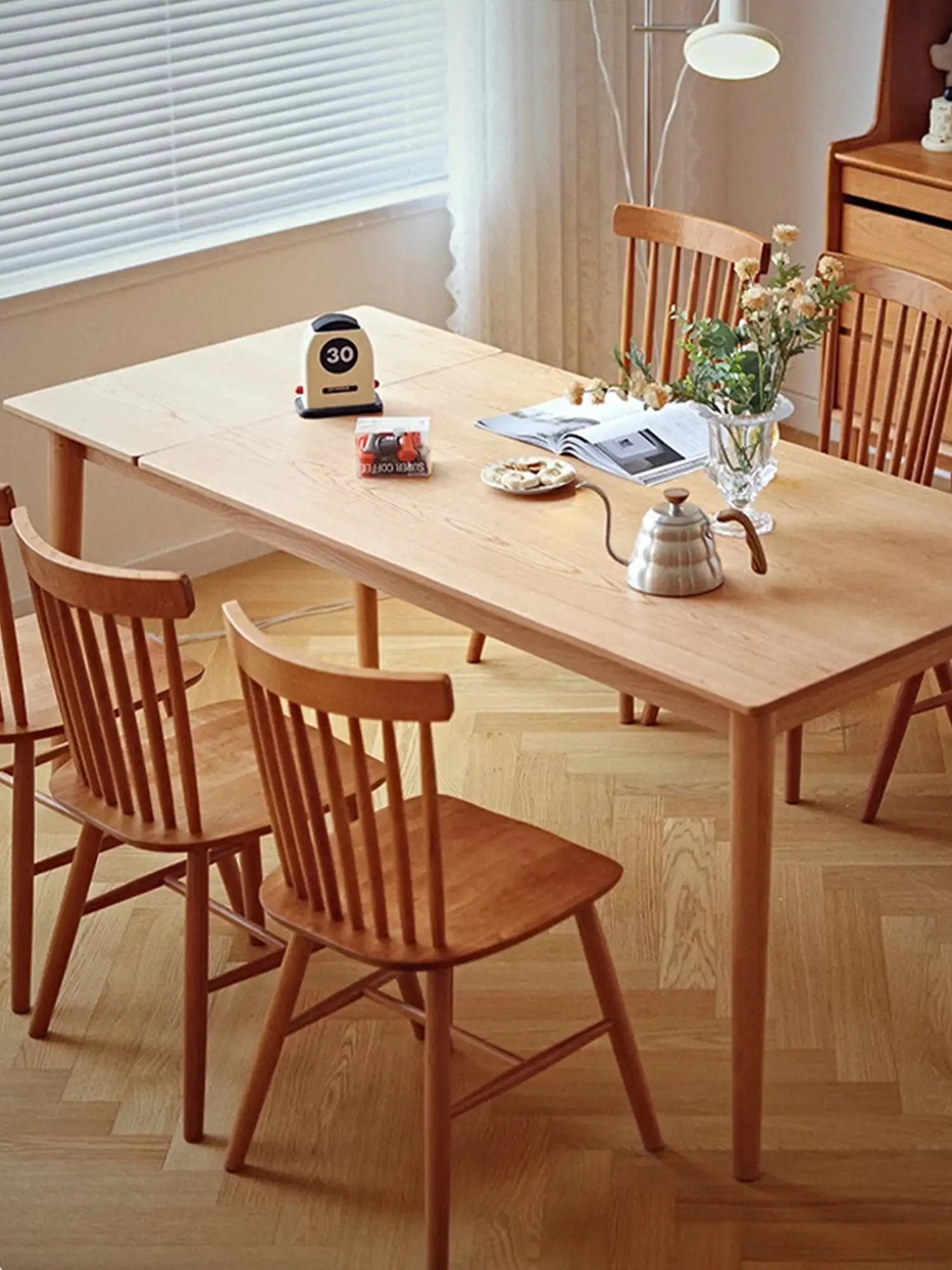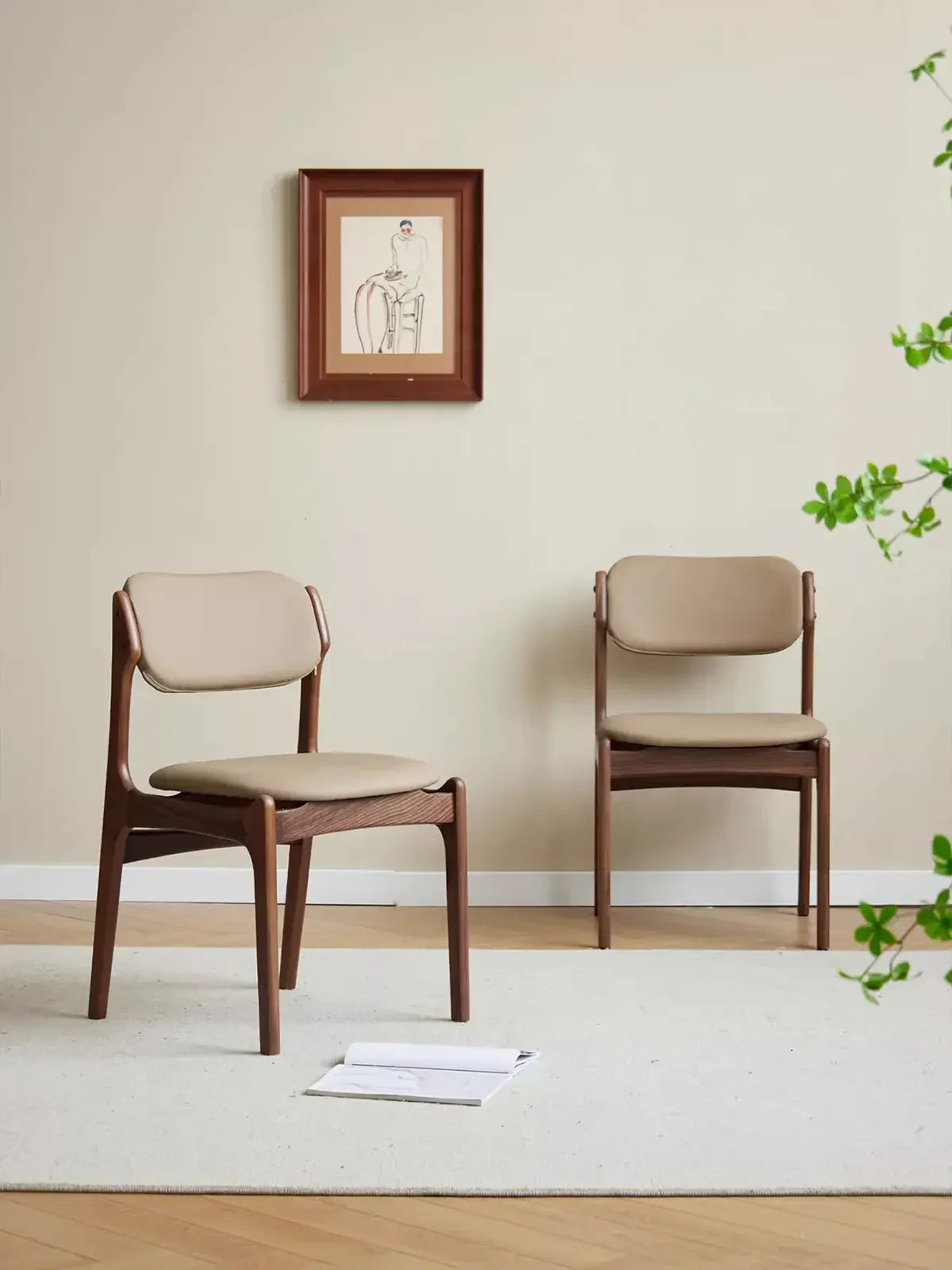
Some furniture is made to fill a space.
Some furniture is made to accompany time.
For this dining chair, we chose FAS-grade black walnut or cherry wood for the frame—not because it is “premium,” but because it achieves a balance between structure, touch, and durability.
Why FAS-Grade Solid Wood?
FAS grade represents a high standard of wood grain and stability selection.
When a chair needs to withstand repeated long-term use—
sitting down, standing up, moving, pushing and pulling—
the integrity of the frame matters more than surface decoration.
Black walnut features deep grain and stable texture.
Cherry wood has a warm tone that naturally darkens over time.
Wood is not decoration—it is part of the structure.

Structure Matters More Than Appearance
From the side view, the lines of this chair are restrained.
No unnecessary decoration,
only naturally flowing curves and stable support points.
You will notice:
-
The connection between the backrest and the vertical posts
-
The load-bearing position of the crossbars
-
The alignment between wood grain direction and weight-bearing direction
These details determine whether a chair can last five years, ten years, or even longer.

Why Add Upholstery?
Many people think of solid wood chairs as beautiful—but not comfortable.
The upholstered backrest and seat are not meant to hide the wood, but to extend the time you can comfortably sit.
A 21 cm back support curve,
and a 46 cm horizontal support width,
help distribute pressure more evenly during long sitting.
A truly comfortable chair will not make you adjust your posture after twenty minutes.

What Spaces Does It Fit?
This chair does not emphasise a specific style label.
Natural wood dining rooms blend effortlessly.
Japanese interiors feel light and balanced.
Nordic studies stay clean and minimal.
The key is not style, but proportion.
When you pull out the chair, sit down, and rest your arms naturally on the table,
the flow of movement is the most honest test.

The Value of a Chair Is Not on Day One
The value of solid wood furniture is not the moment it arrives home.
It is whether it remains stable after two years;
still comfortable after five years;
and still in use after ten years.
Black walnut becomes deeper in tone.
Cherry wood slowly oxidises into a softer colour.
Time is not wear—it is a trace.

How Long Can a Chair Last?
Perhaps this is the real question when choosing solid wood furniture.
Not whether it is fully solid wood.
Not whether it has upholstery.
But—
Is it stable enough?
Is it comfortable enough?
Will it stay with you for a long time?