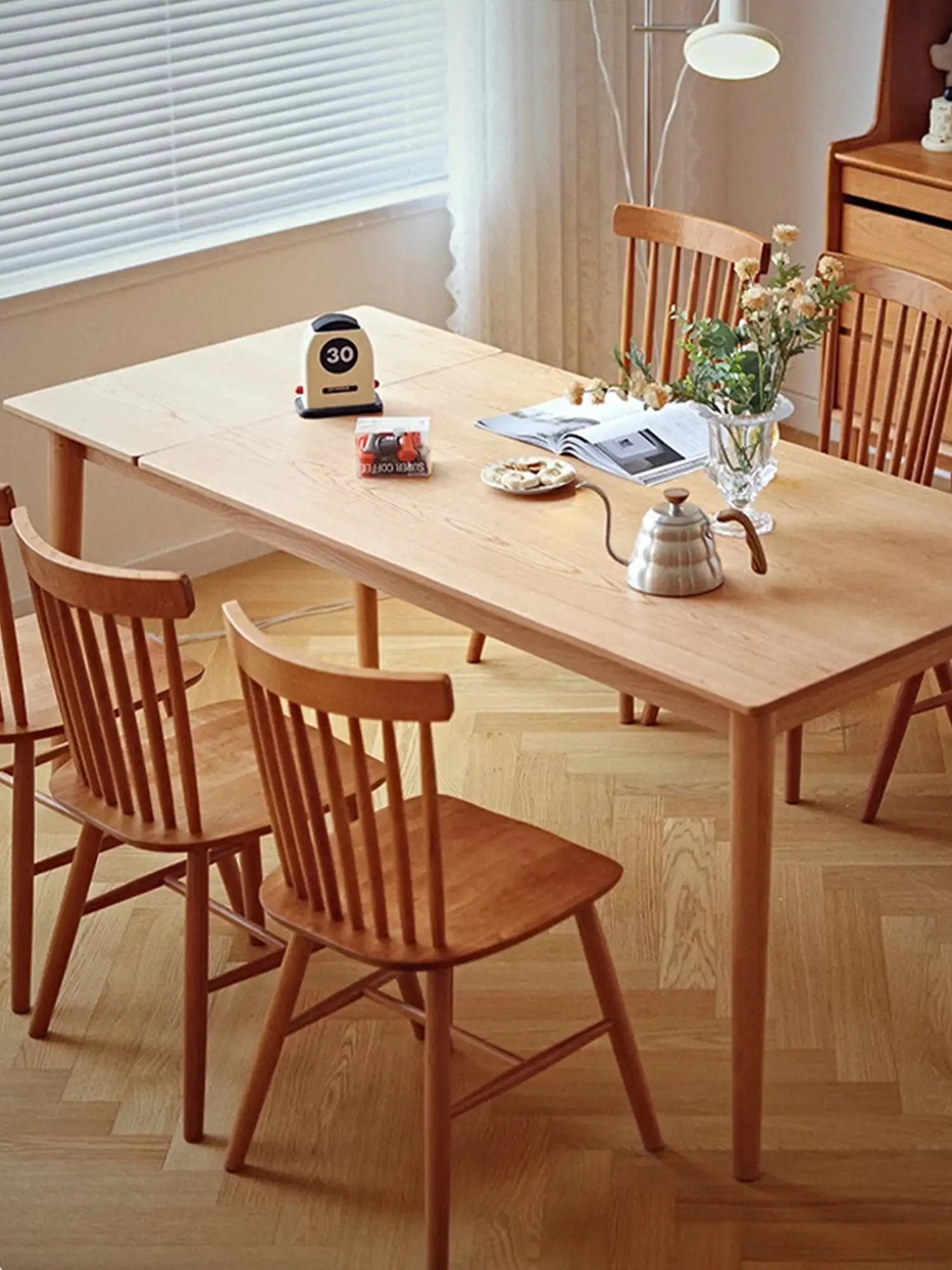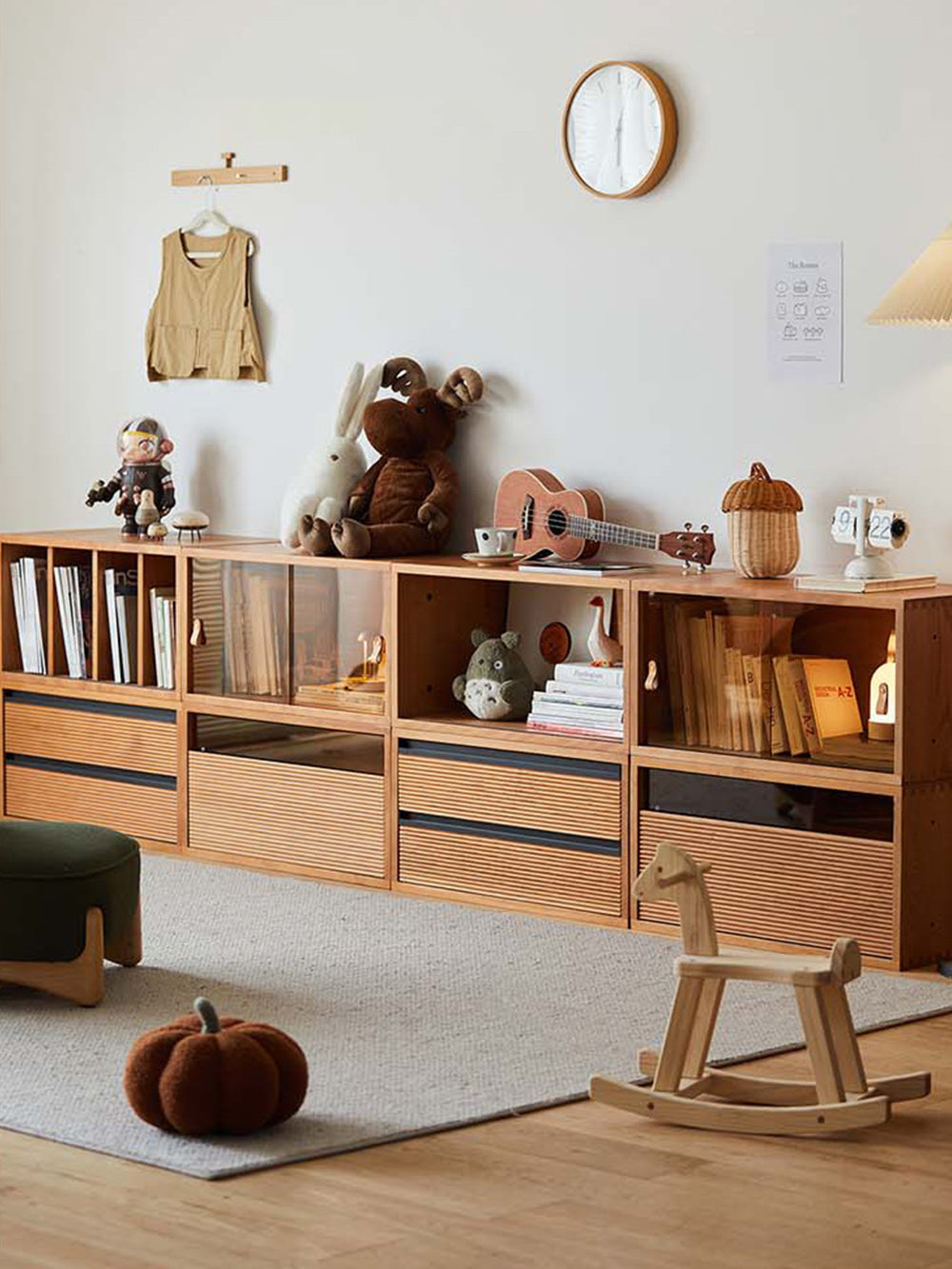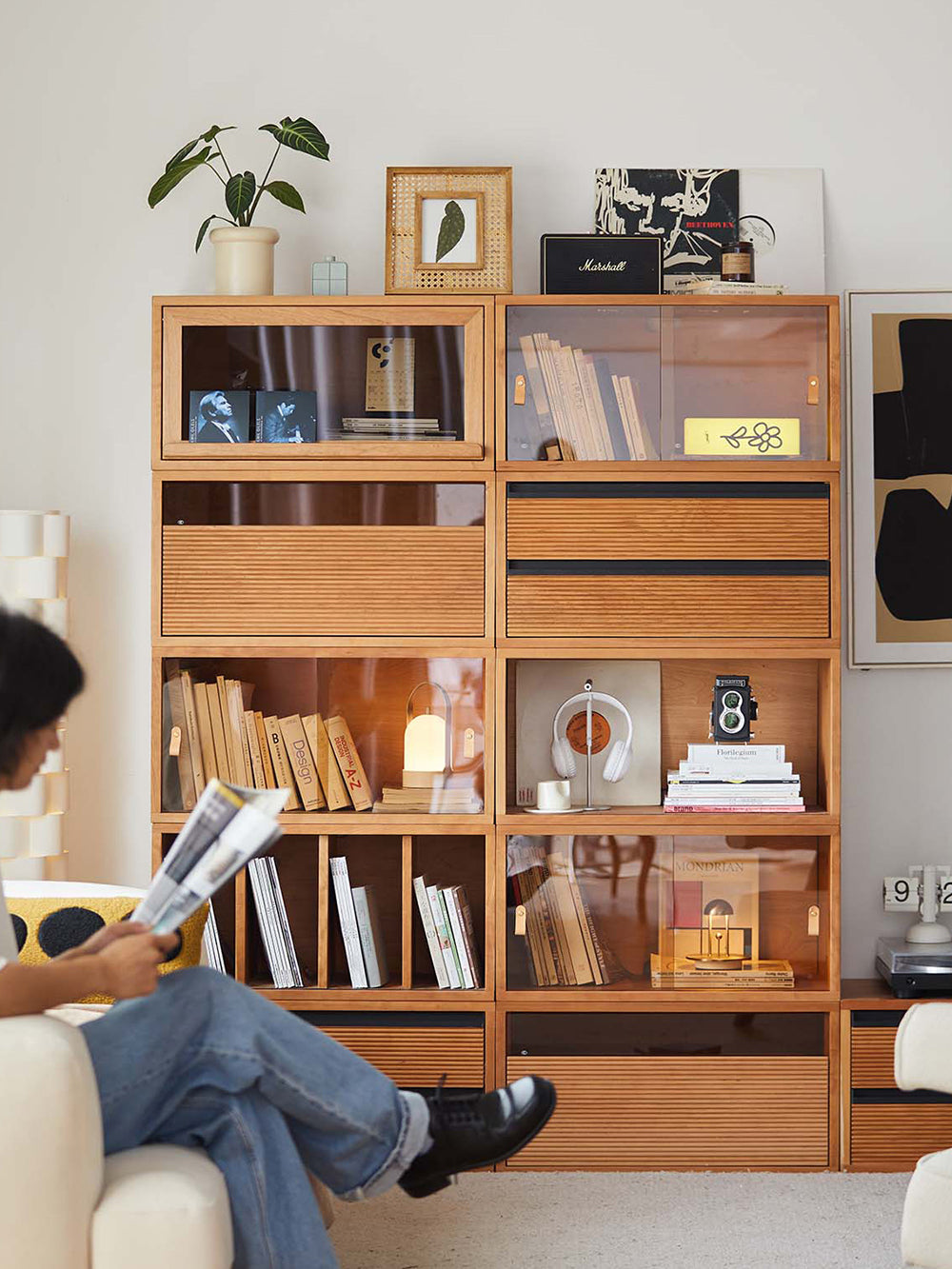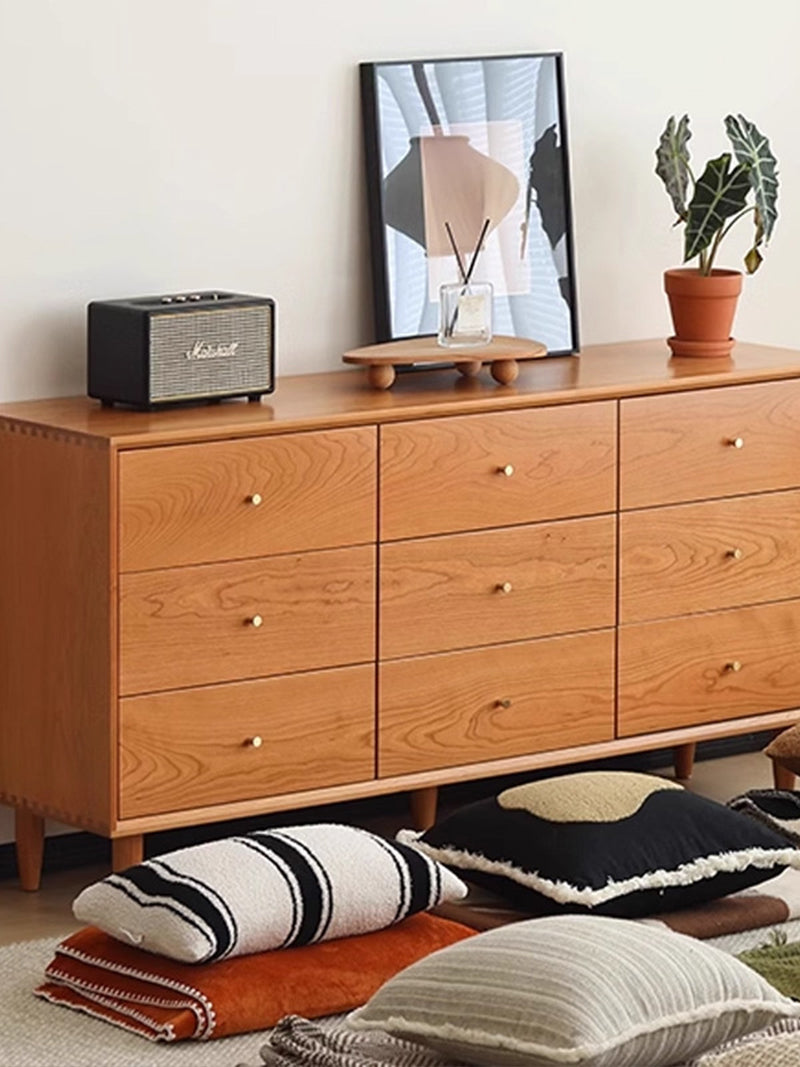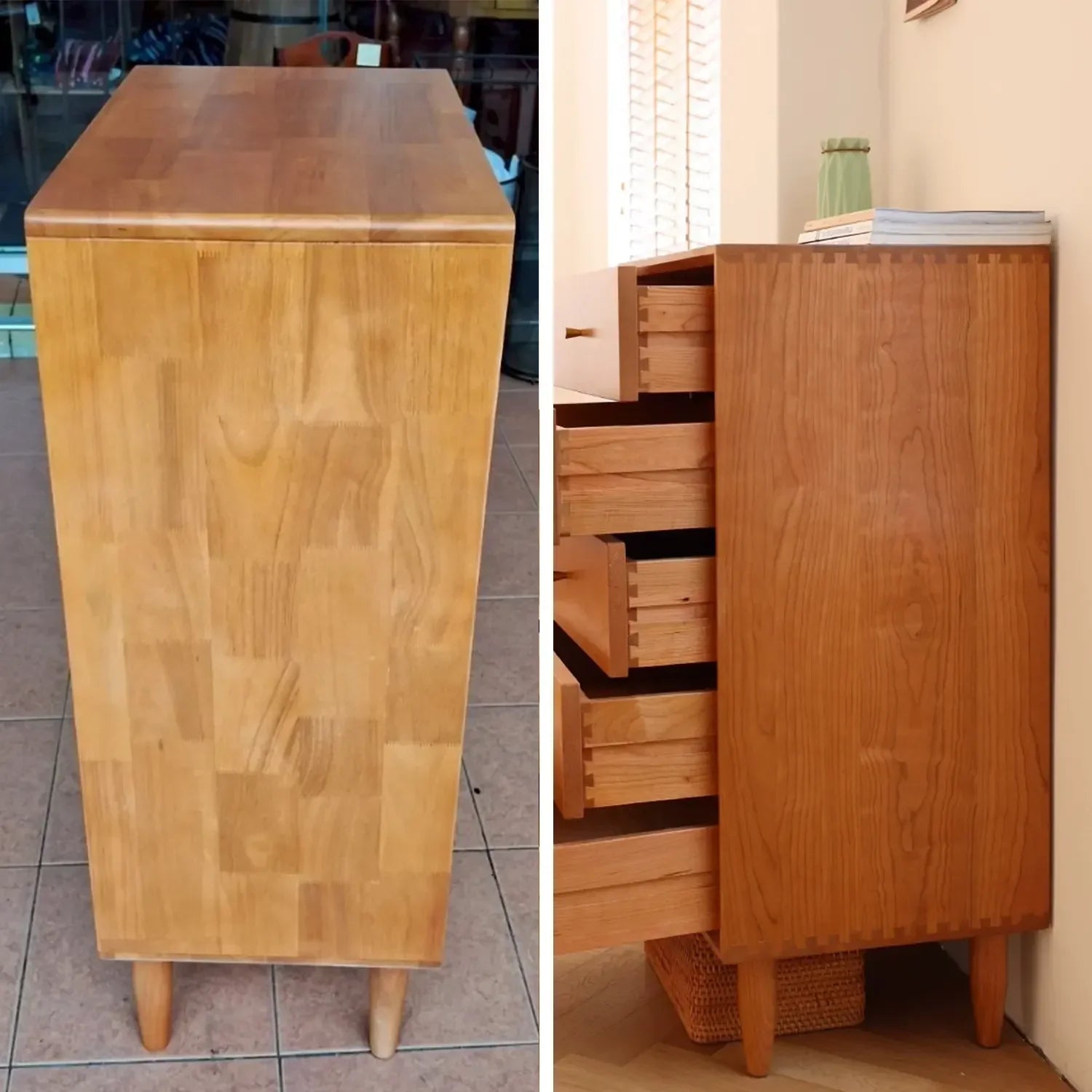
When choosing solid wood furniture, you may come across the following questions:
👉 Why do some woods (pine, rubberwood) show block-like joint patterns?
👉 While woods like cherry and black walnut appear almost seamless with continuous grain?
This is not about “cutting corners”, but rather the result of material properties + cost structure + manufacturing choices.
In this article, we’ll explain three key points:
-
Pine vs cherry wood — what’s the real difference?
-
Why pine / rubberwood commonly use “finger joint panels”
-
Why cherry wood furniture rarely uses them
1. Pine vs Cherry: It Starts with the Nature of the Wood
1|Pine (Pine): Fast-growing and soft

Pine has very clear characteristics:
- Fast growth (matures in 10–20 years)
- Coarse grain with many knots
- Soft wood with moderate stability
👉 This means:
- Large solid panels are prone to warping and cracking
- The wood contains more natural defects (knots, splits)
Therefore, in industrial production,
using large solid boards for furniture carries high structural risk
2|Cherry Wood (Cherry): Stable, refined, and consistent

Cherry wood (North American black cherry) belongs to a completely different category:
- Long growth cycle (50+ years)
- Fine and even grain
- Excellent stability
👉 This results in:
- Ability to use large solid panels
- Lower deformation risk and better structure
- Premium oil finishes that improve over time
2. Why Pine / Rubberwood Use “Finger Joint Panels”
You may notice the block-like patterns in the image above:
👉 Finger Joint Panel
What is a finger joint panel?

It is created by joining smaller pieces of wood with zig-zag joints:
- Removing defective parts (knots, cracks)
- Reusing smaller usable pieces
- Pressing them into a complete panel
Why is this necessary for pine / rubberwood?
1|Material limitations (lack of large boards)
Pine / rubberwood:
- Smaller tree diameter
- Fast growth but limited size
- Few large usable boards
👉 If solid boards are used:
- Costs would increase significantly
- Material efficiency would be very low
2|Stability issues
Solid pine boards:
- Moisture changes → prone to warping
- Many knots → structural instability
👉 Finger joint panels are more stable:
- Stress is distributed
- Less prone to cracking
3|Cost and manufacturing efficiency
This is the most practical reason:
- Higher material utilization (more eco-friendly + lower cost)
- Suitable for mass production
👉 Therefore:
Pine / rubberwood ≠ low-end
But “finger joint panels” usually indicate a value-oriented product approach
3. Why Cherry Wood Rarely Uses Finger Joints
This is the key point 👇
1|The material allows for solid boards

Cherry wood:
- Available in large sizes
- Fewer defects
- Can be cut into high-quality wide boards
👉 No need to “fix” material through jointing
2|Aesthetic expectations in high-end furniture

High-end furniture emphasizes:
- Continuous grain
- Visual integrity
- Material purity
👉 Finger joints disrupt:
- Grain consistency
- Overall texture
- Premium feel
3|Price determines craftsmanship
Cherry wood is inherently a premium material:
- Higher raw material cost
- Higher customer expectations
👉 Therefore:
- No compromise with jointing
- Preference for solid boards + traditional joinery
4. Are Finger Joint Panels Bad?
The answer is: Not necessarily
We can understand it this way 👇
✔ Advantages
- More stable (especially for softwoods)
- More eco-friendly (better material usage)
- More cost-efficient
❌ Limitations
- Less premium visually
- Does not represent “solid slab value”
- Rarely used in high-end furniture
5. How to Identify Wood Quality in Furniture
You can use these 3 simple methods:
1|Check the side panels
- Solid wood → continuous grain
- Finger joint → visible segments

2|Check drawer construction
- High-end: dovetail joinery
- Standard: hardware + panels
3|Check grain consistency
- Cherry: smooth and consistent
- Pine: knot-heavy
- Finger joint: repetitive pattern
Final Takeaway
👉 Pine / rubberwood use finger joints as a rational material and cost solution
👉 Cherry wood avoids them because it simply has the luxury not to
If you are looking for:
- Value / practicality → Pine & rubberwood are good choices
- Texture / long-term value → Cherry wood is the better option