Before Buying Solid Wood Furniture, What Really Matters Is Not “Whether It’s Solid Wood”
When choosing furniture, many people find themselves stuck between “engineered wood” and “solid wood.”
Especially when you are already considering solid wood furniture, the real questions troubling you are usually not:
“Is solid wood good?”
But rather:
-
Is solid wood really more eco-friendly?
-
Will it crack or warp over time?
-
Is it worth paying extra just for the “solid wood” label?
-
Is engineered wood always inferior?
This article starts from the real concerns of people preparing to buy solid wood furniture
and helps you understand what truly matters when comparing engineered wood and solid wood.
So What’s the Real Difference Between Engineered Wood and Solid Wood?
What Is Solid Wood?
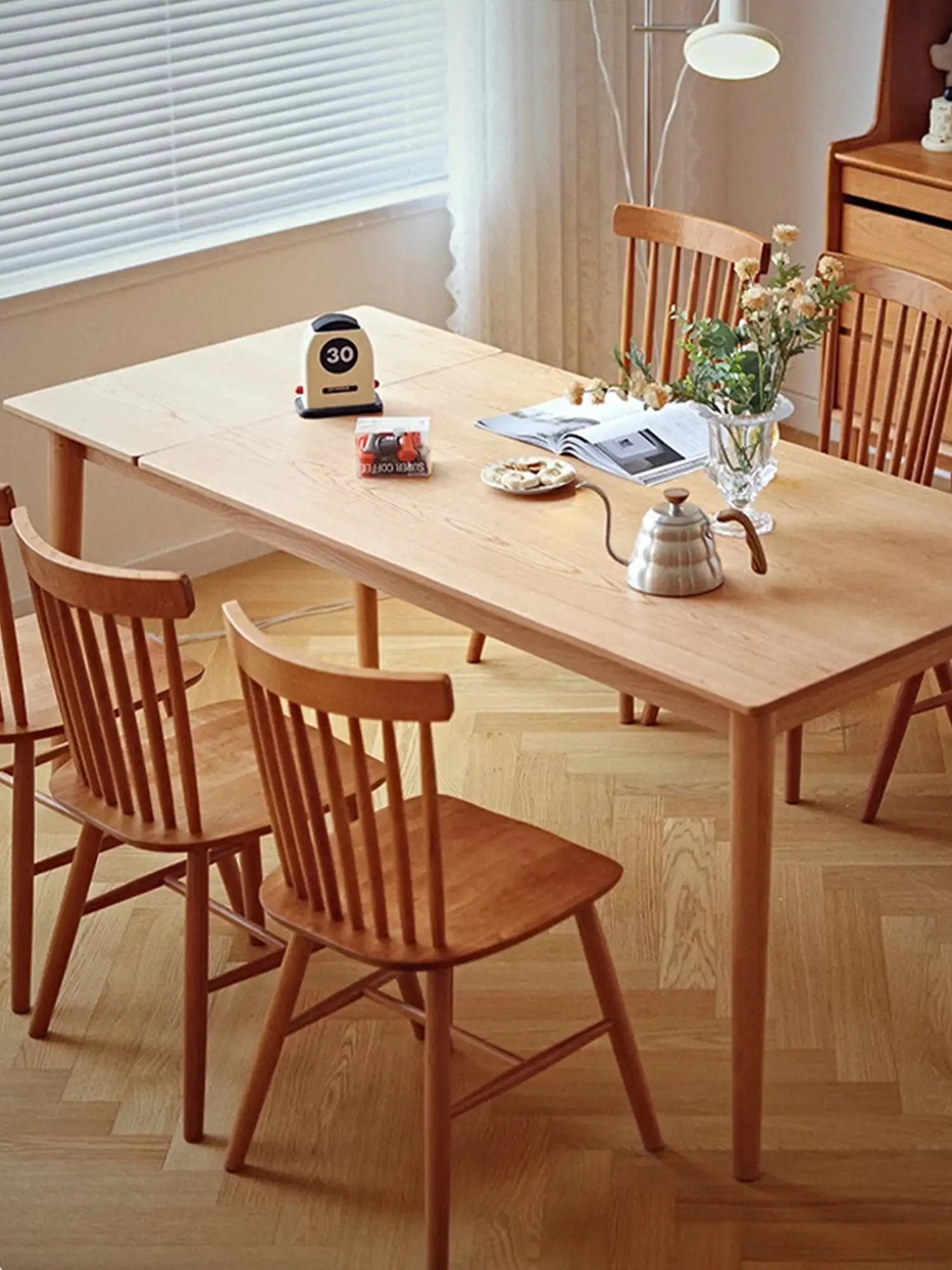
Solid wood panels are made by cutting and processing natural logs. Common species include oak, walnut, ash, and cherry.
Its key characteristics include:
-
A natural material
-
Each grain pattern is unique
-
Naturally changes over time and with the environment
What Is Engineered Wood?
Engineered wood is made by bonding wood chips, fibers, or veneers under heat and pressure. Common types include plywood, particleboard, and MDF.
Its main advantages are:
-
Structural stability
-
Dimensional accuracy
-
Well suited for modular and system-based design
👉 This is not a question of “good versus bad,” but of “fit versus mismatch.”

The First Question Most People Truly Care About: Environmental Impact
Is Solid Wood Always More Eco-Friendly?
Not necessarily.
Solid wood comes from natural forest resources, which does not automatically mean “zero environmental cost.”
In addition, most solid wood furniture still requires surface finishing and coatings.
If production control is poor, its environmental performance may be far from ideal.
Is Engineered Wood Always Unsafe?
Also not necessarily.
High-quality engineered boards (such as E0 or F★★★★ grades)
often offer more stable and predictable control over adhesive use and emissions.
👉 What truly determines environmental performance is not “solid or not,” but:
-
What kind of adhesive is used
-
How much adhesive is used
-
Whether emissions remain stable over time
For most households,
predictability and long-term stability matter more than the idea of being “natural.”

The Second Overlooked Factor: Durability and Long-Term Use
The Strengths — and Real Limits — of Solid Wood
The appeal of solid wood lies in its tactile authenticity and visual weight, but it also comes with natural characteristics:
Strengths
-
High structural strength
-
Good repairability
-
A richer patina over time
Practical limitations
-
Sensitive to humidity and temperature changes
-
May expand, contract, or crack in unstable climates
-
Requires higher structural design precision
This is why truly well-made solid wood furniture
places greater emphasis on structural design and usage conditions, rather than material alone.
The Stability Advantage of Engineered Wood
Thanks to its re-engineered structure, engineered wood is naturally more stable:
-
Less prone to cracking
-
Minimal dimensional change
-
Ideal for large surfaces and modular systems
👉 If long-term stability, low maintenance, and consistency matter to you, engineered wood is not a compromise.

The Question You Should Really Ask: Why Do You Want Solid Wood?
Many people choose solid wood because:
-
They enjoy the authentic tactile feel
-
They are drawn to natural wood grain
-
They want furniture that lasts for decades
-
They want to avoid a sense of cheapness in daily life
But if your core needs are:
-
Precise sizing
-
Flexibility and expandability
-
The ability to reconfigure as life changes
Then structure and system design matter more than the material label.

Noumi’s Material Philosophy: Needs First, Labels Second
Every material has its strengths — and its boundaries.
Solid wood offers irreplaceable tactile and visual appeal,
but demands higher environmental and structural control.
Engineered wood excels in stability and predictability,
making it ideal for modular and reconfigurable systems.
At Noumi, we select materials based on structural requirements, usage scenarios, and long-term stability,
rather than simply choosing what sounds more “premium.”